Overview
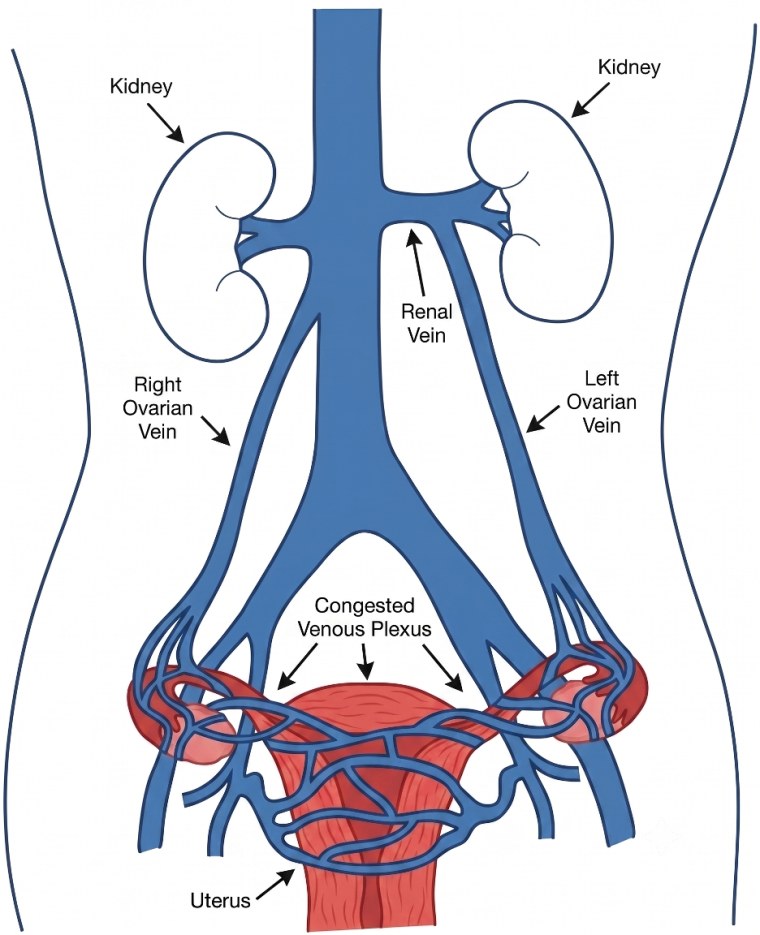
Pelvic congestion syndrome (PCS) is caused by enlarged, varicose veins in the lower abdomen and pelvis. Just as with varicose veins in the legs, the valves inside these pelvic veins stop working correctly. Blood flows backward and pools, creating pressure that causes a heavy, chronic, dull ache.
Pelvic vein embolization is a minimally invasive procedure that closes off the faulty veins from the inside, relieving both the pressure and the pain.
It replaces open surgery such as ovarian vein ligation or hysterectomy, which involve large incisions and weeks of recovery. It is also a lasting alternative for women who have been relying on daily pain medication or hormone therapy simply to manage their symptoms.
Embolization treats the root cause of pelvic pain of venous origin without major surgery, requiring only a needle puncture in the skin, and allowing most women to return to normal life within a few days.
Who it’s for
Most women considering this procedure come to us after more than six months of heavy, aching pelvic pain. The pain typically worsens after standing for long periods, at the end of the day, during or after intercourse, or just before a menstrual cycle. Many have already tried birth control pills or pain relievers without lasting relief.
A specialised ultrasound, CT scan, or MRI of the pelvis is used to confirm the diagnosis. The imaging will show enlarged pelvic and ovarian veins, with blood flowing in the wrong direction.
Who is not a candidate
If your chronic pelvic pain is caused primarily by endometriosis, uterine fibroids, or an active pelvic infection, embolization will not resolve it. In those cases a different treatment plan is needed, and we will work with your care team or refer you to find the right approach.
How the procedure works
1. Accessing the vein
An interventional radiologist cleans and numbs a small area at the groin, at the bikini line, where it will not be visible. We avoid neck access where we can. Most women prefer the groin, where no mark or scar is seen. A tiny tube called a catheter, about the width of a piece of spaghetti, is inserted through a small needle puncture access into the vein.
2. Navigation and imaging
Using real-time X-ray guidance, the catheter is navigated through your blood vessels down to the enlarged ovarian and pelvic veins. You will not feel this happening inside your body.
3. Blocking the veins
Once the catheter is in position, we release tiny platinum coils, a medical foam called a sclerosant, or both. This permanently seals the abnormal leaking veins and depressurises the stretched pelvic veins that are causing the pain.
4. Rerouting blood flow
With the faulty veins blocked, blood naturally reroutes through surrounding healthy veins, immediately reducing the raised pressure in your pelvis. The catheter is removed and a simple bandage is applied.
What to expect on the day
When you arrive, our team will get you comfortable and start an IV. You will be given “twilight” sedation, so you will be relaxed and sleepy but breathing on your own, without general anesthesia.
The procedure itself typically takes 45 to 90 minutes. Afterward you will rest in our recovery room for about an hour while the sedation wears off. Because there are no major incisions, you go home the same day.
Recovery
Recovery is brief. On day one, plan to rest at home. You may experience pelvic cramping that feels much like a menstrual period, along with mild soreness at the access site. This is completely normal and is easily managed with a heating pad and over-the-counter pain relievers such as ibuprofen or acetaminophen.
By the end of the first week most women feel back to normal. You can typically return to a desk job or light duties within two to three days. We ask that you avoid heavy lifting, strenuous exercise, and sexual activity for 7 to 10 days, so the veins heal properly.
What is normal, and when to call
Mild bruising at the entry site and pelvic cramping are expected. Call our office if you experience severe or worsening pain that medication does not help, a fever above 101°F, or active bleeding or significant swelling at the access site.
Risks and considerations
Pelvic vein embolization is highly safe, but there are rare potential risks.
Common, minor side effects include bruising at the access site and a few days of pelvic cramping.
Rare but more serious risks include infection, injury to the blood vessel, or migration of the coils to another part of the body. Because the procedure is performed by a highly trained interventional radiologist using advanced imaging, the risk of vessel injury or coil migration is extremely low, under 1%. If a complication does occur, our team is fully equipped to manage it immediately.
Results and evidence
The clinical evidence supporting embolization for pelvic congestion syndrome is very strong. Studies show a technical success rate of over 95%, meaning the targeted veins can almost always be sealed successfully.
For pain relief, up to 85% of women experience significant improvement or complete resolution of their chronic pelvic pain.
The result is durable, and it is very rare for treated veins to reopen. Many women report a dramatic improvement in quality of life, energy levels, and comfort during daily activities.
Common questions
- Is it painful?
- The procedure is very well tolerated. We numb the entry site with local anesthesia and provide IV sedation to keep you relaxed, and you will not feel the catheter inside your body. Afterward it is common to have pelvic cramping for a few days, which patients describe as feeling like a menstrual period. A heating pad and over-the-counter pain medicine manage it easily.
- Will insurance cover it?
- Yes. When pelvic vein embolization is performed to treat medically diagnosed chronic pelvic pain, it is generally covered by Medicare and most major insurance carriers. We always recommend checking with your provider, and our office will help you verify your exact benefits.
- How soon will I notice a difference?
- The faulty veins are blocked immediately, but it takes a little time for inflammation to settle and for your body to adjust. Most women begin to notice a significant reduction in pelvic heaviness and pain within two to four weeks.
- What happens if it doesn’t work?
- If you have not felt relief after a few months, we will re-evaluate your symptoms. Sometimes smaller surrounding veins need treating in a second, minor procedure. If the veins are completely sealed but the pain persists, another condition such as endometriosis is likely contributing, and we will work with your care team to explore other treatments.