Overview
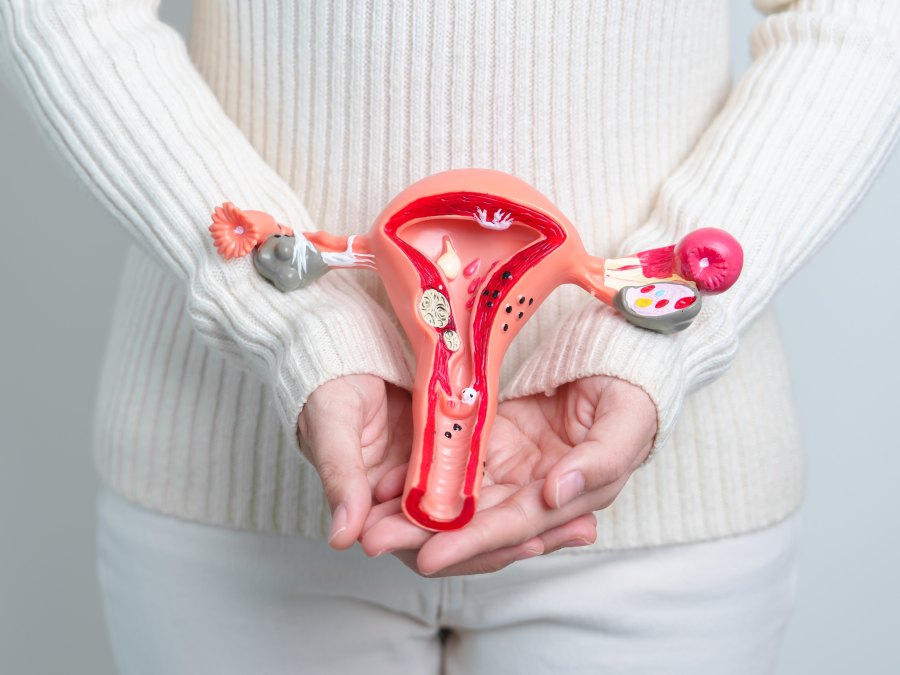
Uterine fibroids are benign muscle tumors that grow in or on the uterus. Adenomyosis occurs when the tissue that normally lines the uterus grows into the muscular wall. Both conditions can cause heavy menstrual bleeding, severe pelvic pain, and a constant feeling of heaviness or pressure.
Uterine fibroid embolization, also known as uterine artery embolization, is a minimally invasive procedure designed to safely shrink fibroids and adenomyosis by blocking their blood supply.
It serves as a highly effective, modern alternative to major surgery such as hysterectomy or myomectomy. It allows women to keep their uterus, avoid surgical incisions, and experience a much faster recovery.
Embolization can treat all fibroids and adenomyosis simultaneously, providing dramatic relief from heavy bleeding and pelvic pressure without general anesthesia or a hospital stay.
Who it’s for
Most women considering this procedure come to the clinic because their symptoms are actively interfering with daily life. Symptoms often include exceptionally heavy or prolonged periods, severe menstrual cramps, a frequent urge to urinate, or pain during intercourse. These patients are usually looking for a definitive treatment that avoids surgery, and avoids having the uterus removed.
An MRI or ultrasound of the pelvis is required to accurately map the size and location of your fibroids or adenomyosis, and to confirm that you are a good candidate.
Who is not a candidate
If your symptoms are caused by an active pelvic infection or suspected pelvic cancer, or if you are currently pregnant, embolization is not the right treatment. In these cases we will direct you to a specialist for the appropriate surgical or medical care.
How the procedure works
1. Accessing the artery
An interventional radiologist cleans and numbs a small area on your upper thigh, at the bikini line. A tiny tube called a catheter, about the width of a piece of spaghetti, is inserted through a small needle puncture access into the artery.
2. Navigation and imaging
Using real-time X-ray guidance, the catheter is navigated through your blood vessels to the uterine arteries that supply the uterus. You will not feel this happening inside your body.
3. Blocking the blood flow
Once the catheter is positioned, tiny gel particles are injected into the specific vessels feeding the fibroids and adenomyosis. These particles wedge into place, blocking the abnormal blood flow.
4. Shrinkage and relief
Deprived of oxygen and nutrients, the targeted tissue softens and shrinks over time. The catheter is removed and a simple bandage is applied.
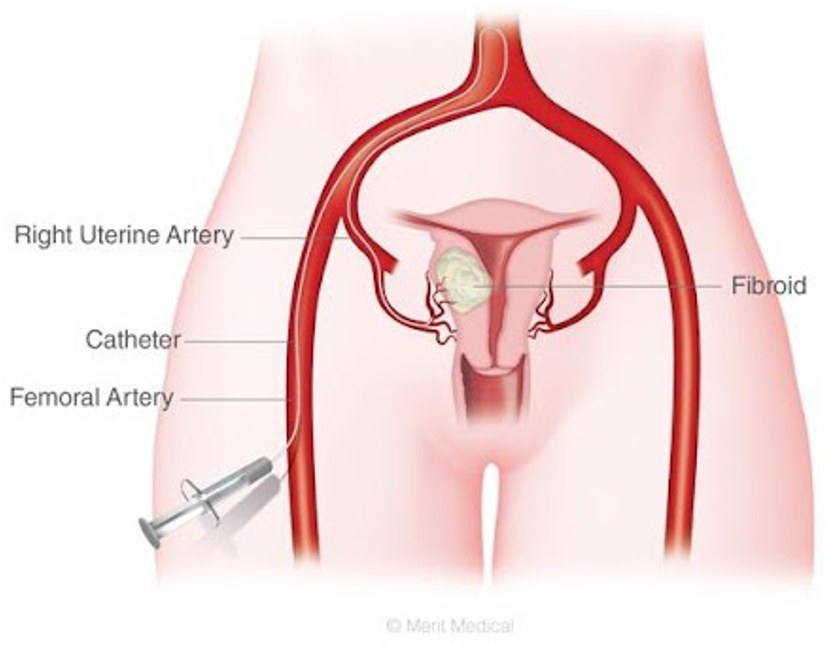
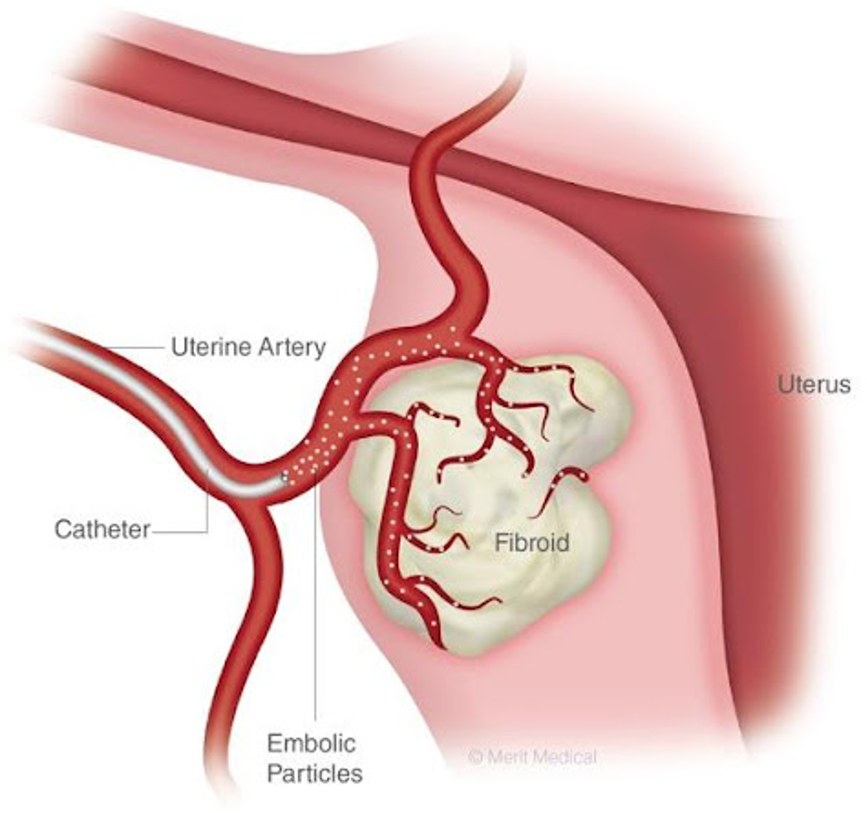
Illustrations © Merit Medical, used with permission.
What to expect on the day
When you arrive, our team will get you comfortable and start an IV. You will be given “twilight” sedation, so you will be relaxed and sleepy but breathing on your own, with no breathing tube and no general anesthesia.
The procedure itself typically takes about 30 minutes. Afterward you will rest in our recovery room for about an hour. Because there are no surgical incisions, you go home the same day.
Recovery
Recovery requires some downtime, but it is highly manageable with the right preparation.
On days one through three it is very common to experience what is known as post-embolization syndrome: moderate to severe pelvic cramping, nausea, fatigue, and a low-grade fever. This means the procedure is working. It is the targeted tissue breaking down. We prescribe a comprehensive regimen of pain relievers and anti-nausea medication to keep you comfortable at home.
By the end of the first week most women feel significantly better and are back to their baseline energy levels. You can typically return to a desk job or normal daily activities within 7 to 10 days. We ask that you avoid heavy lifting and strenuous exercise for about two weeks, so the access site heals properly.
What is normal, and when to call
Pelvic cramping and a low-grade fever are completely normal for the first few days. Call our office if you experience pain that is not controlled by your medication, a fever above 101°F, active bleeding at the access site, or unusual, foul-smelling vaginal discharge.
Risks and considerations
Uterine fibroid embolization is very safe, but as with all procedures there are small potential risks.
Common side effects include post-procedure cramping, nausea, and temporary fatigue.
Rare but more serious risks include pelvic infection, injury to the blood vessel, or the embolic particles affecting healthy tissue. In a very small percentage of women who are perimenopausal, typically those over 45, the procedure can bring on the onset of menopause.
Because the procedure is performed by a highly trained interventional radiologist using advanced imaging, major complications are extremely rare.
Results and evidence
The clinical evidence supporting embolization for both fibroids and adenomyosis is excellent. Studies show a technical success rate of over 95%, meaning the interventional radiologist can almost always successfully block the targeted arteries.
For symptom relief, more than 90% of women experience significant and lasting improvement in heavy menstrual bleeding, pelvic pain, and bulk-related symptoms.
Fibroids typically shrink by up to 50% in volume over the first six months and soften considerably, so they no longer press on the bladder or bowel. Long-term studies show high levels of patient satisfaction and a very low need for future surgical intervention.
Common questions
- Is it painful?
- The procedure itself is not painful. Local anesthesia and IV sedation keep you relaxed and comfortable. Moderate to severe pelvic cramping is common for the first few days afterward, and we proactively prescribe strong pain relievers and anti-inflammatory medication so you can manage it at home. We also typically administer a nerve block during the procedure, which helps immensely on the first day, when it is most uncomfortable.
- Will insurance cover it?
- Yes. Uterine fibroid embolization is a widely recognized, medically necessary treatment for symptomatic fibroids and adenomyosis. It is covered by Medicare and virtually all major private insurance carriers. Our office will help you verify your exact benefits and coverage before you proceed.
- How soon will I notice a difference?
- Most women notice a dramatic difference in menstrual bleeding by their first or second cycle after the procedure. Bulk symptoms such as pelvic pressure or frequent urination take a little longer, typically resolving gradually over the following two to six months as the treated tissue shrinks.
- What happens if it doesn’t work?
- A small number of women do not get the relief they hoped for, or find symptoms return over time. If that happens we start by re-imaging to understand why. Sometimes a vessel has reopened, sometimes a fibroid was fed by an artery outside the usual supply, and sometimes the symptoms turn out to have a separate cause. Depending on what we find, options include a repeat embolization or a referral for myomectomy or hysterectomy. Nothing about this procedure prevents you from having surgery later if you need it.
Further reading
UFE or hysterectomy? How the options for fibroids compare
Recovery, effectiveness, durability and fertility, set side by side.